
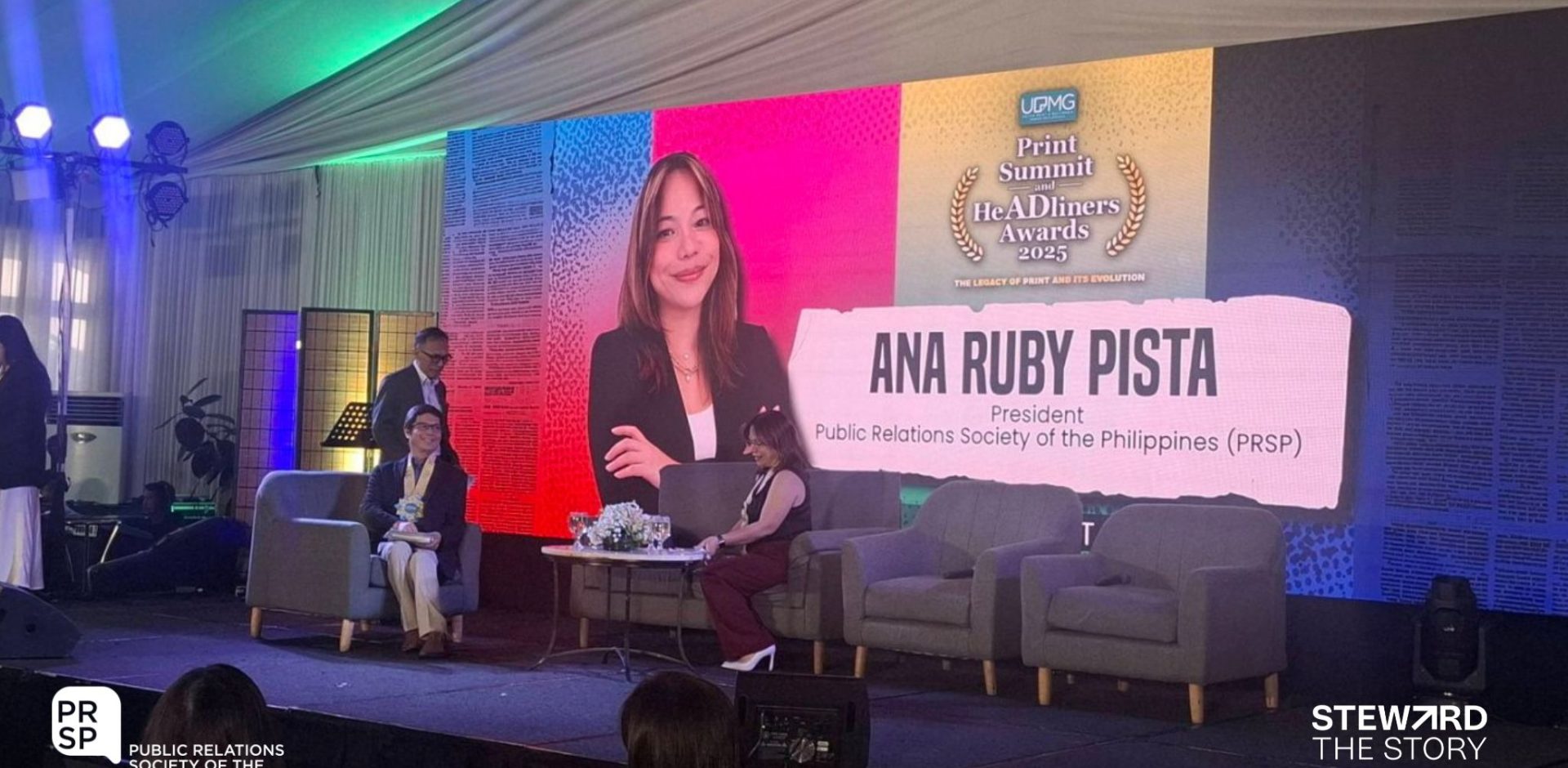
Ana Pista, APR, the president of the Public Relations Society of the Philippines, and United Print & Multimedia Group Philippines come together on stage at the Print Summit and HeADliners Awards.
MAKATI, PHILIPPINES — Industry leaders of the United Print & Multimedia Group Philippines reaffirmed the enduring relevance of print media in an increasingly digital world during the Print Summit and HeADliners Awards 2025, held on March 24, 2026 at the Glass Pavilion, Dusit Thani Manila.
Anchored on the theme “The Legacy of Print and Its Evolution,” the panel discussion brought together experts from public relations, journalism, and media to examine the current state of print and its role in a fast-changing communications landscape.
The session was moderated by Robbie Aligada, Executive Director of the Ad Standards Council, and featured panelists T. Anthony Cabangon, Publisher of BusinessMirror; Ana Ruby Pista, President of the Public Relations Society of the Philippines; Blen Fernando, Trustee of the PANA Foundation; and Wally Panganiban, Corporate Affairs Manager of NutriAsia.

Ana Pista, APR, joins fellow industry leaders onstage as a panelist to share insights on the evolving relevance of print in a fast-moving communications landscape.
A Medium Repositioned, Not Replaced
Offering a candid perspective, Pista noted that while print is no longer the dominant force it once was, its value remains intact.
“Print is no longer the dominant force, and advertising budgets have significantly shifted to digital,” she said. “But print is not dead—it has simply been repositioned.”
She emphasized that print continues to play a critical role in public relations, particularly in milestones and crisis communications, where credibility and legitimacy are essential.
“It still carries a different weight compared to a social media post,” she added. “Print has permanence, trust, and the ability to build narratives that endure.”
From Decline to Transition
Panelists agreed that print should not be viewed as a dying medium, but rather as one undergoing transformation. While circulation and readership have declined, print remains valued for its depth, credibility, and ability to foster critical thinking through long-form content.
Cabangon underscored the continuing challenge for publishers, citing declining revenues alongside the need to maintain journalistic standards.
Fernando highlighted print’s historical and cultural significance, describing it as a medium that has long contributed to nation-building and informed public discourse. She emphasized that print’s strength lies in its ability to provide depth, focus, and permanence, qualities often lacking in fast-paced digital environments.
Meanwhile, Panganiban pointed to print’s role in shaping critical thinking and preserving cultural identity, stressing that future generations must continue to experience long-form reading to develop deeper understanding and perspective.
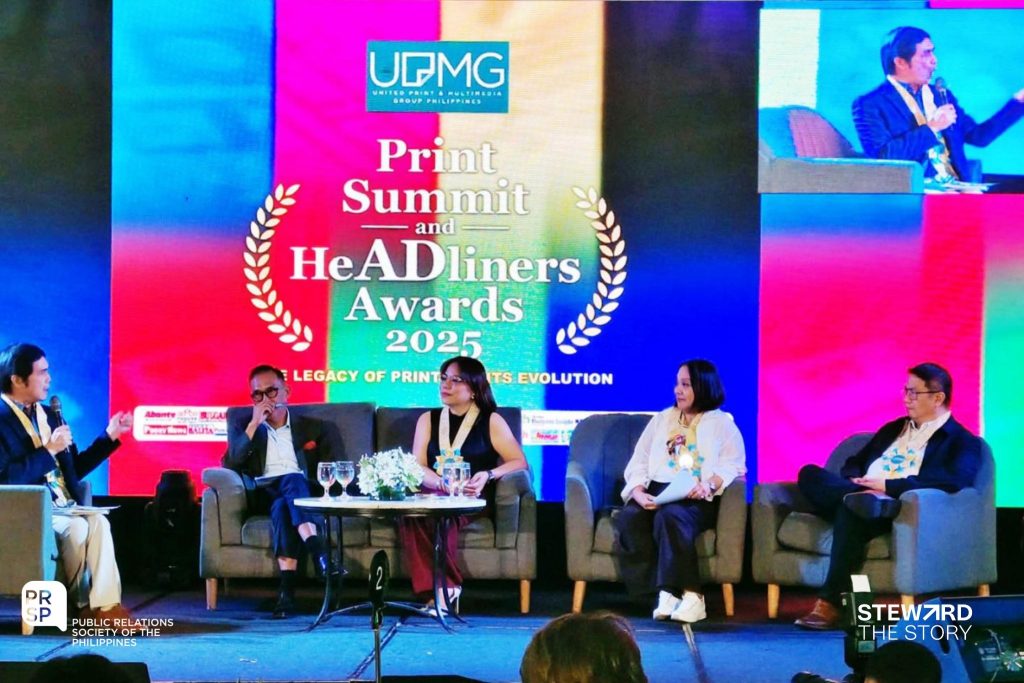
Ana Pista, APR, joins fellow industry leaders onstage as a panelist to share insights on the evolving relevance of print in a fast-moving communications landscape.
Evolving with Purpose
As the media landscape becomes more fragmented, panelists emphasized that the future of print lies in integration with digital platforms and data-driven strategies.
Pista highlighted the importance of understanding audience behavior and making informed decisions through research and analytics.
“The question is no longer whether print will survive, but how it will evolve,” she said. “Like any industry facing disruption, those who fail to adapt risk being left behind.”
She introduced key approaches such as trigger planning, which involves identifying audience behaviors and decision points, and emphasized the need to “go back to basics” while embracing innovation.
The panel also highlighted the importance of integrating print appreciation into education, ensuring that future communicators recognize its role as a credible and enduring source of information.