UNMUTED: Winning Voices of the 2025 PRSP Student Congress & Grand Prix
December 03, 2025
Written by: Claudio R.
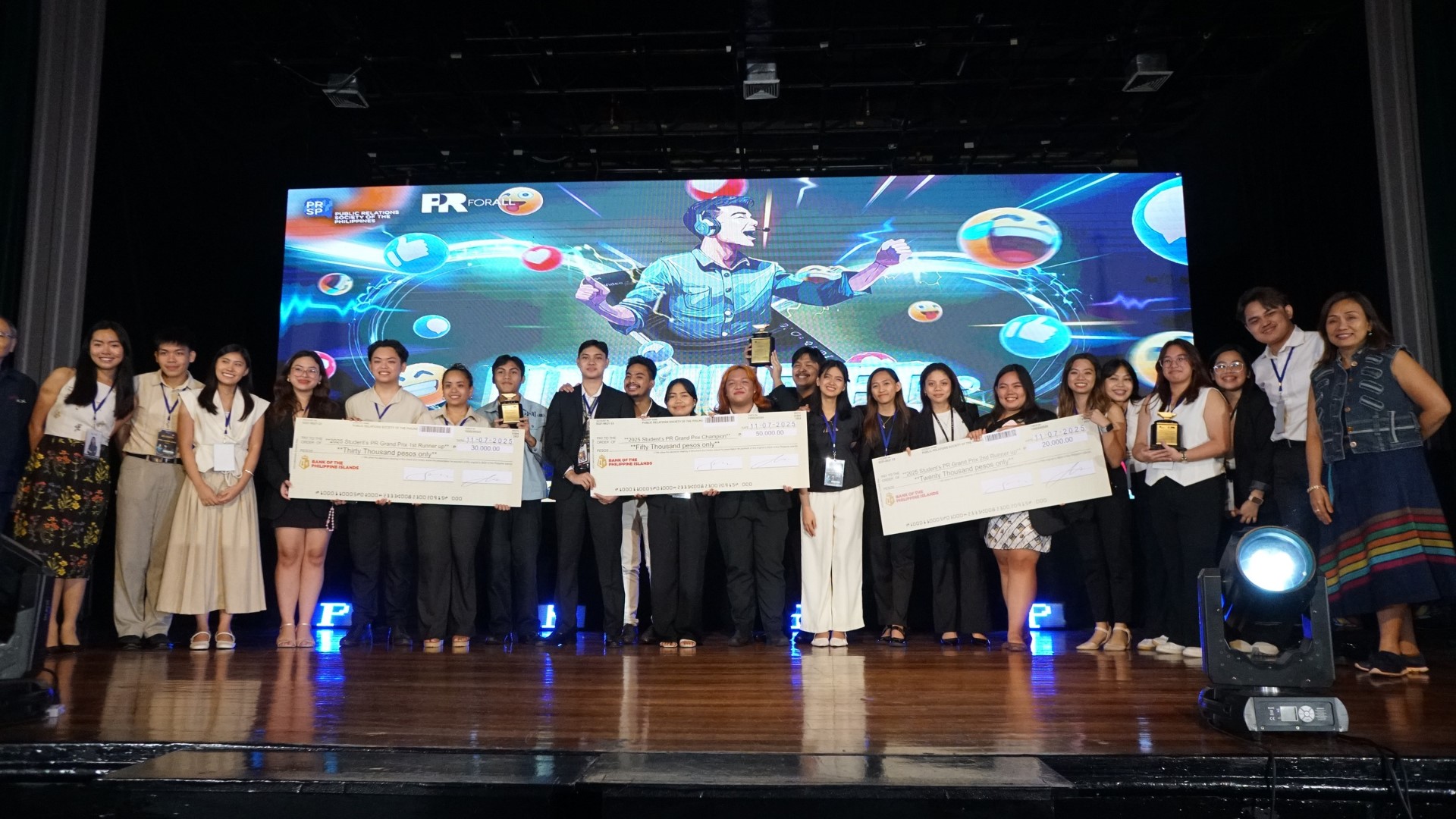
The campus of De La Salle College of Saint Benilde buzzed with focus as more than twenty institutions converged for the 2025 National Student PR Congress and Grand Prix. Over two days, hallways that normally echoed with routine chatter pulsed with nervous preparation, strategy discussions, and the quiet determination of young communicators eager to prove their ideas could spark national conversations.
The competition challenged students to craft campaigns that were creative, strategic, socially responsible, culturally relevant, and capable of making a real impact. Each finalist carried months of effort: long nights refining campaigns, consultations with faculty mentors, and the pressure of presenting their ideas before the country’s most sought-after communication leaders—the best of the best in Philippine public relations.
When judges announced the top three teams, it was clear these campaigns were more than classroom exercises. They were ready for real-world deployment, each reflecting a distinct approach yet sharing a commitment to responsible storytelling. The winners showed that being unmuted today isn’t just about being heard—it is about communicating with clarity, empathy, and purpose, shaping the future of public relations in the Philippines.
GRAND PRIX CHAMPION: ABakaDawTotoo
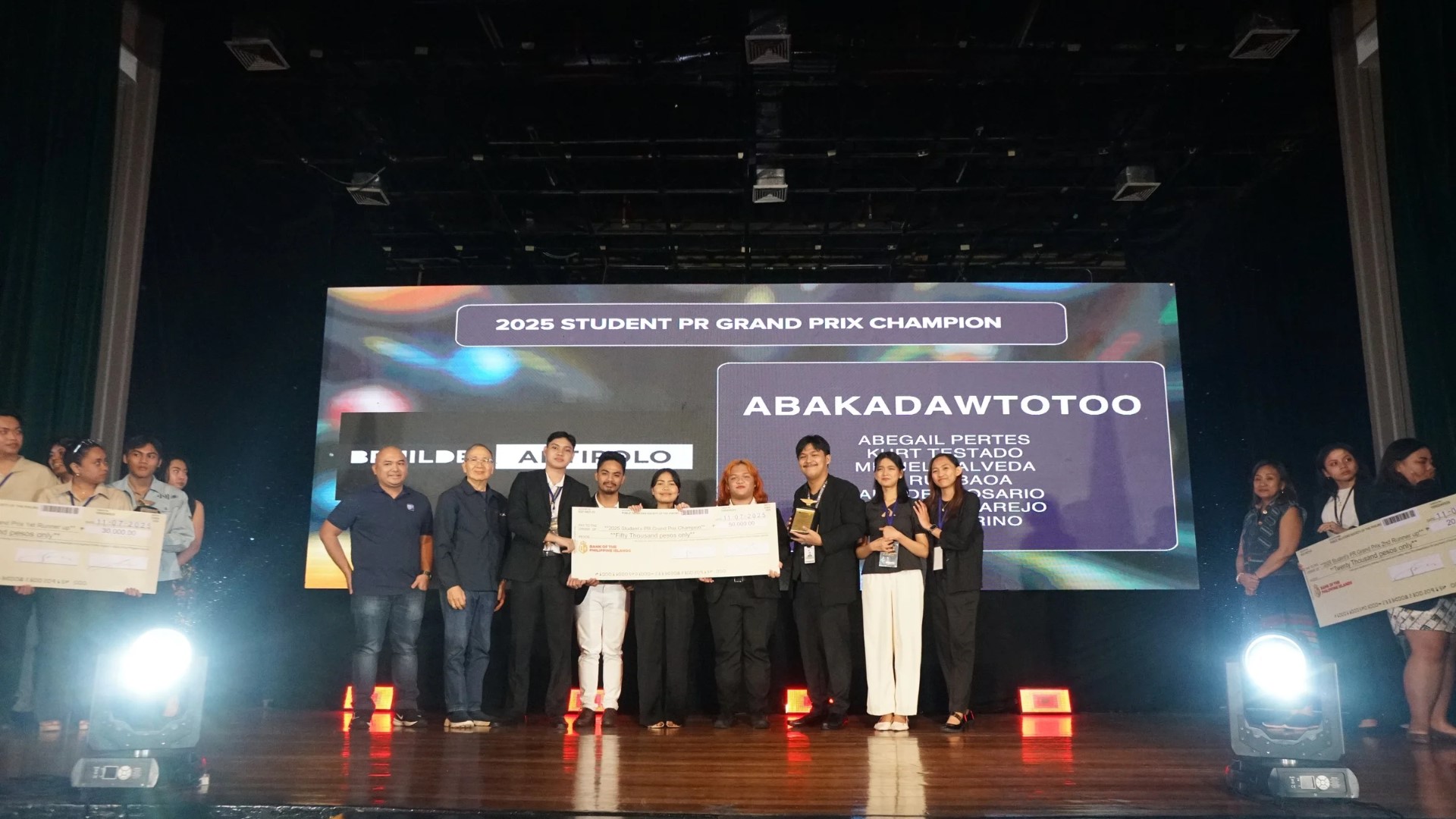
De La Salle College of Saint Benilde, Antipolo
If there was one team that embodied what it means to be unmuted, it was the DLS–CSB Antipolo team — Abegail Pertes, Jade Del Rosario, AJ Rumbaua, Robin Cariño, Kurt Testado, Miguel Malveda, and Lance Melgarejo — who entered the Grand Prix with a mission anchored in urgency: to help rebuild public trust in credible journalism in an era of rising AI-driven misinformation.
Guided by Coach Viveca Singson, Professor Ijssel Menes, and School Head Dr. Arlyn Tumala, the team approached ABakaDawTotoo with the discipline of a young agency determined to make every insight count. “As Communication students ourselves, our campaign is driven by the need to strengthen and rebuild public trust in credible journalism, given the rising media distrust fueled by AI-driven fake news, and using the concept of Abakada to emphasize how the basics of literacy and education can help build more media-literate Filipinos,” they explained.
Their preparation was intensive. The team spent around three weeks developing the campaign paper—from brainstorming and research to writing—followed by less than a week of preparation in case they advanced to the Top 5 finalists. “The 15-minute presentation forced us to refine our content and focus on the strongest and most essential parts of our campaign: the story and the execution,” they shared. Balancing thesis deadlines and part-time work added to the challenge, but the team remained determined.
What truly distinguished their campaign was purpose. “Media literacy is more than a campaign; it’s a daily practice of critical thinking,” Abegail explained. “Small, consistent efforts can create ripple effects in how people discern information.” Their focus on foundational literacy and education set a clear, actionable direction that resonated with judges.
In closing, the team expressed gratitude for the platform the PRSP Congress provided. “Thank you so much for giving students a space where we can learn, share our skills, and showcase our creativity with excellence. For future participants: don’t be afraid to go the extra mile, embrace the process wholeheartedly, and remember that the biggest win comes from the learnings and experiences you gain along the way,” they said.
FIRST RUNNER-UP: PAMANA
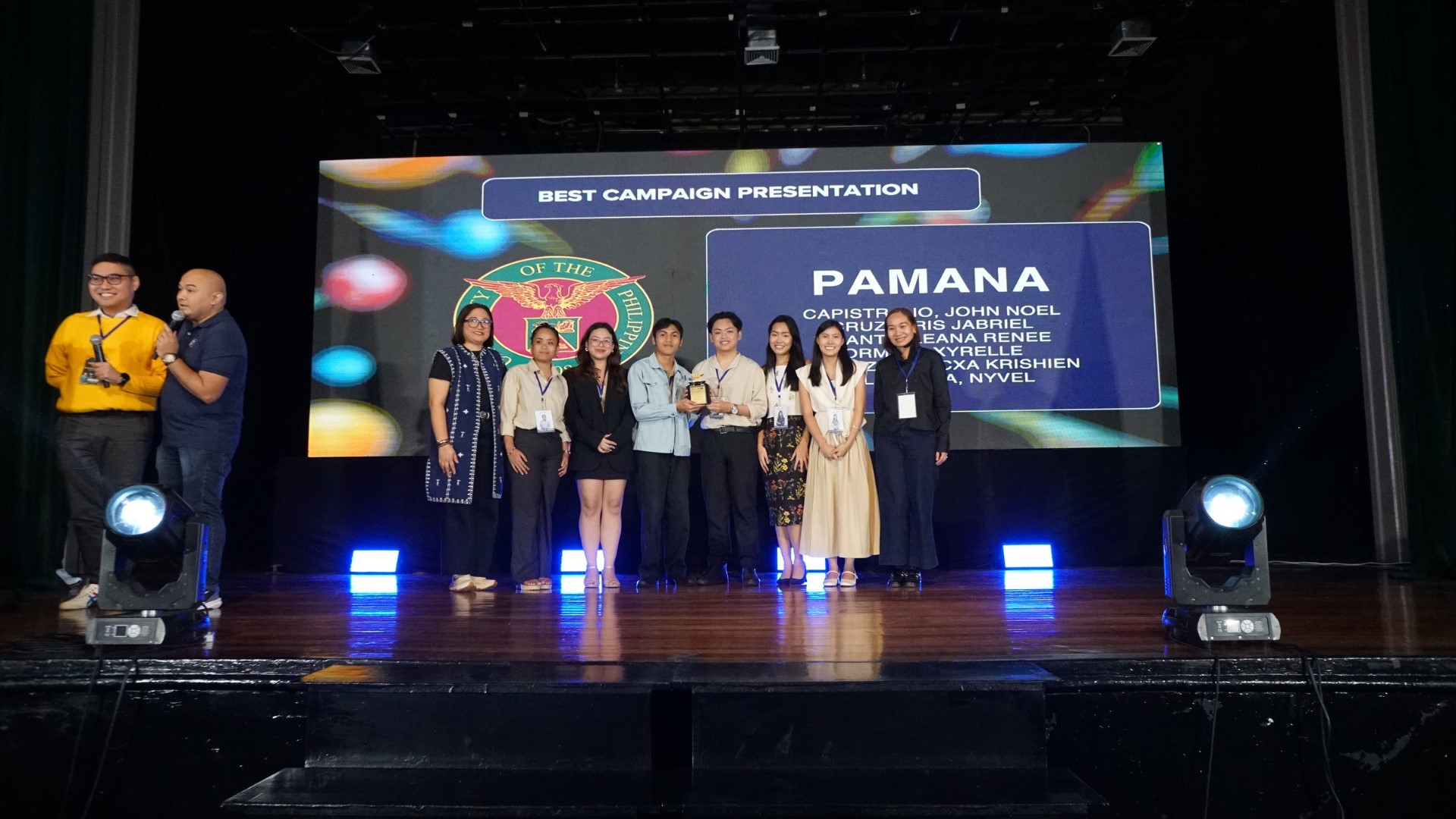
University of the Philippines Los Baños
While Antipolo confronted misinformation with urgency, the students from UP Los Baños offered a reflective lens. Their campaign, PAMANA, told a quieter but compelling story: media and information literacy is not only technical—it is cultural, relational, and inherited.
The PAMANA team — John Noel Capistrano, Cris Jabriel Cruz, Alyssa Nicole Gonzales, Leana Renee Infante, Xyrelle Ormita, Allecxa Krishien Ramirez, and Nyvel Villanueva — drew inspiration from the rich heritage of the UPLB community and the idea of “home” for students far from their families. Their campaign showed that media literacy can start within households, bridging generational gaps while fostering critical thinking and awareness.
Guided by mentor Elizabeth Segura-Krueger, MA, and supported by Department Chair Liberty Nolarte-Balanquit, the team prepared their proposal in just one week. They balanced academic responsibilities and personal commitments while navigating the uncertainty of joining the competition as a group of friends. “Deciding to join was a hurdle at first,” they shared. “But this became both a learning experience and an opportunity to strengthen our bond while achieving something meaningful.”
PAMANA’s strength lay in its cultural fluency. While other teams tackled misinformation through tools or workshops, UPLB reminded audiences that understanding begins at home. Their campaign honored tradition while preparing families for a rapidly shifting digital world—a balance that left a lasting impression on judges. It emphasized that public relations is not only about strategy but also about heart: connecting with audiences begins by engaging one’s own community, reflecting empathy, dialogue, and cultural understanding that can ripple outward beyond the home.
Judges praised the team for clarity of message and depth of insight. Despite limited preparation time, PAMANA delivered a coherent and culturally resonant campaign that combined creativity, relational intelligence, and actionable recommendations.
“The core message of your PR plan is what truly connects with your audience,” the team reflected. By staying true to this principle, PAMANA demonstrated that impactful public relations is as much about understanding and connecting with people as it is about execution, earning them the distinction of First Runner-Up.
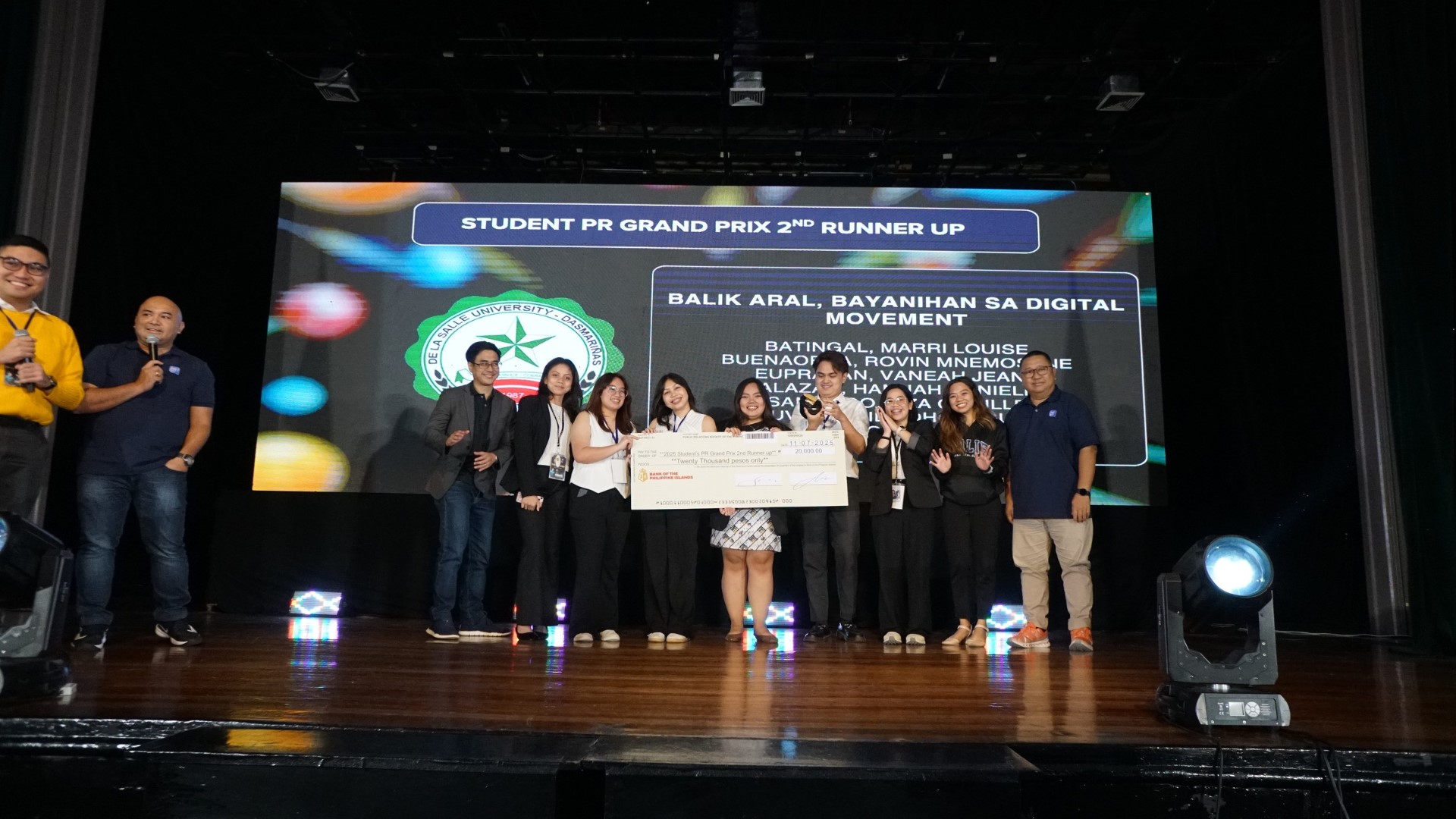
SECOND RUNNER-UP: Balik Aral, Bayanihan sa Digital Movement
De La Salle University, Dasmariñas
If Antipolo was bold and UPLB reflective, DLSU–Dasmariñas brought heart. The team behind Katha Kommunications — Marri Louise Batingal, Rovin Mnemosyne Buenaobra, Vaneah Jeanne Eupratan, Hannah Daniella Salazar, Jiza Camille Santiago, David John Miguel Suva, and Tenshi Tara — transformed the Filipino spirit of bayanihan into a communication strategy that bridged digital divides for communities often left unheard.
Under the mentorship of Isolde E. Valera, MAComm, and with support from Dean Edwin F. Lineses, the team envisioned learning as a shared act of uplift. “Our inspiration comes from people living on the margins. MIL can sound intimidating, so we aimed to bring MIL knowledge closer to the people, starting with our own community through a collective effort,” they explained.
Despite limited preparation time, the group’s discipline shone through. They conducted mock presentations the day before the Congress and again on competition day, refining their pitch with precision. “Time management was our biggest challenge,” Hannah shared. “But that pressure taught us resilience and teamwork.”
The campaign paired students with senior citizens as “MIL buddies,” forming intergenerational partnerships that made digital literacy feel less like a hurdle and more like a collaborative community project. “MIL isn’t just about sharing knowledge,” Marri Louise said. “It requires patience, empathy, and trust.”
Closing their campaign, the team shared a message that captured the spirit of the event: “We extend our gratitude to the organizers for cultivating a dynamic and inspiring environment that empowers young communication practitioners. To future participants, may you embrace the challenge of maximizing the power of communication as a lending hand, stay committed to your craft, and allow this experience to elevate your passion in communication — live, loud, and limitless.”
WHAT IT MEANS TO BE UNMUTED TODAY
Across the two-day Congress and Grand Prix, Unmuted revealed itself as more than a theme—it became the clearest picture of how the next generation understands communication.
In Antipolo, it meant choosing truth in a digital age crowded with misinformation.
In Los Baños, it meant turning knowledge into shared heritage and connection.
In Dasmariñas, it meant creating space for voices long overlooked.
Different approaches, one intention: to communicate with responsibility and purpose. These campaigns showed that being unmuted today isn’t about speaking louder—it’s about speaking with clarity, empathy, and intention. It’s the evolution of PR from simply informing to genuinely serving.
For seasoned practitioners, it was a reminder. For students, it was a promise.
They didn’t just present campaigns.
They presented what the future of PR can look like.
They are unmuted.
They are ready.
And they carry forward a profession that is braver, more thoughtful, and grounded in integrity.